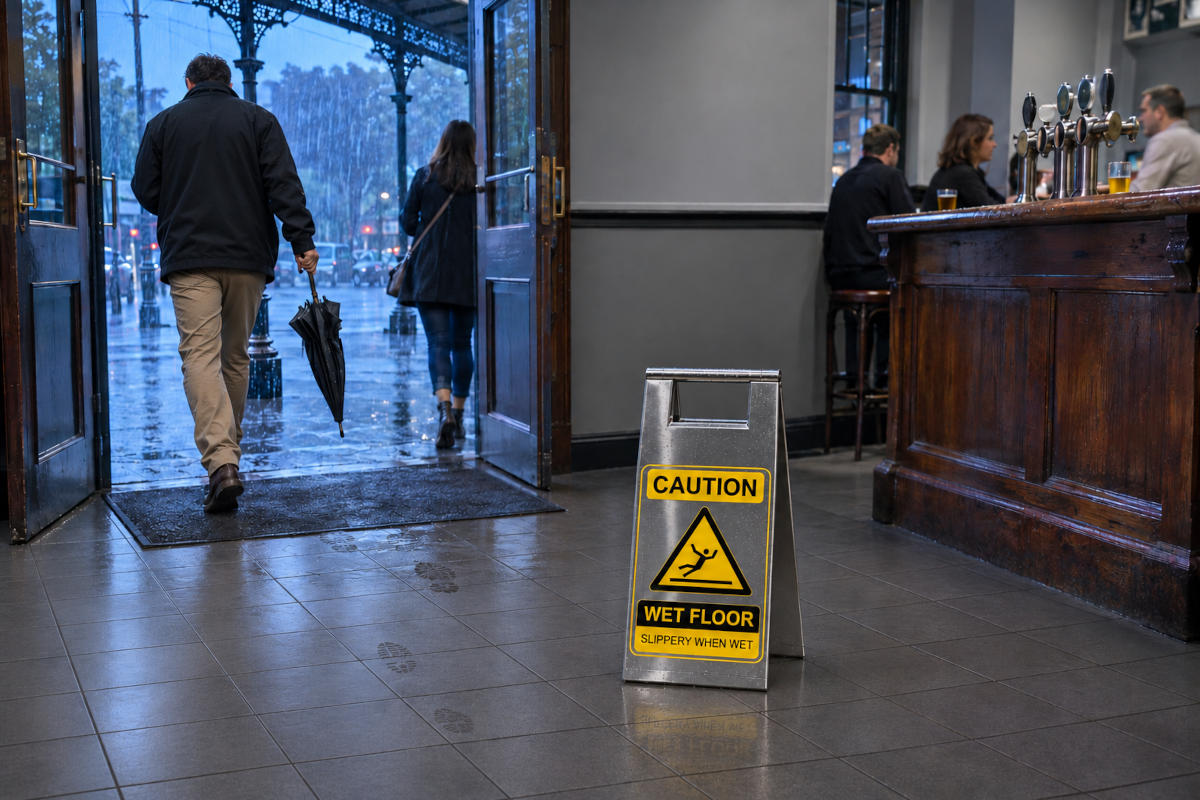
Slippery floors are an often-overlooked risk in hospitality, particularly during wet weather and peak trading periods. Rain, heavy customer traffic and spilled drinks can quickly turn otherwise safe surfaces into potential accident sites.
For pub owners and managers, effective floor safety is not just about keeping the venue looking presentable. It is an important part of protecting customers, staff and the business.
The scale of the problem is significant.
Preliminary figures in Safe Work Australia’s Key Work Health and Safety Statistics 2026 show that slips, trips and falls accounted for 32,700 serious workers’ compensation claims in 2024-25, representing 22.2 per cent of all serious claims. The typical claim involved almost nine weeks away from work and approximately $19,100 in compensation.
The financial exposure for hospitality businesses extends beyond workplace injuries.
A customer who slips and suffers an injury may pursue a public liability claim. APRA’s 2023 review of public liability insurance put the average bodily injury claim at around $130,000, identifying falls as a significant contributor to claim costs.
Average public liability premiums also increased by approximately 40 per cent between 2015 and 2021.
Within a pub, several areas require particular attention. Entrances are especially vulnerable during wet weather, as customers bring water inside on shoes, clothing and umbrellas. Tiles and polished timber can become particularly slippery when wet. The transition between beer gardens and indoor areas also presents risks, with wet paving and decking transferring moisture onto internal floors.
Inside the venue, the bar and dance floor are common problem areas. Spilled beer, cocktails, melting ice and broken glass can create hazards that are difficult to identify when the venue is crowded and lighting is low. Toilets also need regular inspection, particularly around basins and handwashing facilities.
Staff face additional risks behind the bar, in kitchens and in storage areas, where wet mats, grease, condensation and recently washed floors can contribute to workplace injuries.
There are also important legal obligations.
Under Australia’s model Work Health and Safety laws, those managing or controlling a workplace must ensure, so far as is reasonably practicable, that the workplace and its entry and exit points are without risks to health and safety. This duty extends to customers as well as employees.
The courts have reinforced the importance of taking reasonable precautions.
In Sutherland Shire Council v Safar \[2017\] NSWCA 203, a woman slipped on a wet floor at an entertainment centre during rainy weather. Previous slips had been recorded, and she was awarded $288,820. One judge described umbrella bins near the entrance as “a matter of inexpensive simplicity”.
The case demonstrates that straightforward preventative measures can be important when assessing whether an organisation has adequately managed a foreseeable risk.
For pub operators, prevention starts with establishing clear procedures.
Wet weather should trigger more frequent inspections of entrances, walkways and toilets, with responsibility assigned to specific staff members.
Mian Muhammad Sami of Australian wet weather safety equipment supplier Slip-Less Services says entrance matting should be long enough to allow customers several steps to remove moisture from their footwear, while suitable facilities should be provided for wet umbrellas.
“Wet floor signs should be displayed whenever a hazard exists and removed once the floor is dry”, Sami continued.
Older tiles and polished surfaces can be assessed under AS 4663, which covers slip resistance testing of existing pedestrian surfaces. Where necessary, anti-slip treatments or resurfacing should be considered.
Staff should wear enclosed footwear with slip-resistant soles and worn or curling rubber bar mats should be replaced.
Every slip and near miss should also be documented, including the corrective action taken. This helps identify recurring hazards and provides evidence that risks are being actively managed.
With wet weather creating additional challenges for venues across Australia, Sami believes reviewing floor safety procedures is a worthwhile investment. A consistent approach can help prevent injuries, reduce liability exposure and keep the venue operating safely.
“Storm season is already under way on the east coast. The front door is a sensible place to start,” he concludes.