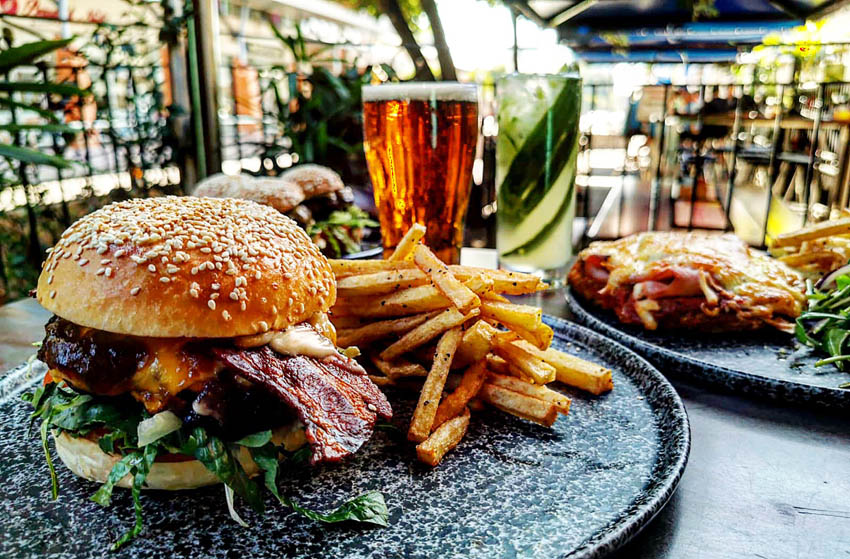
Last week, strict new rules for Alice Springs pubs became effective following a decision by the Northern Territory Liquor Commission (NTLC).
The rules will affect over twenty licensed venues, restricting them from serving full strength liquor on Wednesdays, Thursdays and Fridays between 11:30am and 3pm, unless serviced with a “full meal”.
Exemptions are made for legitimate accommodation guests and for seated groups of four or more who have ordered shared food.
Cathy Simmonds, CEO of Hospitality NT said they were disappointed by the decision.
“It’s one thing to vary the conditions of one license as a disciplinary action, but it is quite unprecedented for the Liquor Commission to add conditions to 20 licences at once when there is no allegation of wrongdoing or licence breach,” she said.
In the NT regulatory environment, liquor is already a complex subject.
Prior to this decision, all takeaway liquor outlets were closed on Mondays and Tuesdays, only opening between 3pm to 7pm, with just one transaction allowed per customer per day, severely limiting trade.
For venues, full strength alcohol could not be served prior to 11:30am.
In the NT, ‘full strength’ is classified as 3.99 per cent alcohol by volume (ABV), while most Australian beers are between 4.5 and 5 percent ABV.
Simmonds said the decision was made following allegations of persistent antisocial behaviour on Wednesdays, Thursdays and Fridays by Yeperenye Shopping Centre.
The behaviour was associated with nearby drinking venues, yet neither the allegations nor the decision indicated if similar behaviour was observed on Mondays and Tuesdays.
NT Police Southern Commander James Gray-Spence said the measures were intended to curb mid-week alcohol-related incidents.
While NT Police data does show that overall crime is lower on Mondays and Tuesdays, Simmonds questioned the commission’s interpretation of the data, saying that most locals and visitors drank responsibly.
“Alcohol sales have been going down every year since 2018, since reforms were put in place, and crime had not improved until the last 12 months, where the figures are showing real reductions,” Simmonds said.
The hospitality sector has strongly opposed the NTLC’s decision, pointing out that with a casual workforce, the new rules would be very easy to accidentally breach, and difficult to implement, placing further pressure on staff and venues.
The impact of associated costs of training and monitoring, and the effect on tourism, is a further concern.
The rules also appear inconsistent, allowing a group of four to order a small side with alcohol, but demanding solo drinkers order a full meal.
Local patrons are confused, unsure why drinking full strength alcohol can be considered fine on a Tuesday yet harmful on a Wednesday.
One anonymous pub manager believes that venues were being unfairly targeted, and locals would just find other ways to acquire alcohol without the benefit of RSA monitoring.
“These types of restrictions and prohibitions in general only do one thing: put money into the hands of criminals and strengthen criminals,” the manager told News.com.au.
The manager claimed that on New Year’s Eve, ninety-five per cent of confiscated alcohol in Alice Springs was bootlegged liquor, coming from either Mount Isa in Queensland or Port Augusta in South Australia.
While the local industry views the main problem to be smuggled alcohol, Chair of the Liquor Commission, Russell Goldflam said that while the commission was aware of other causes beyond its power, varying licence conditions was all it could do, and the changes were aimed at balancing business’ operational decisions with public safety.
Goldflam, whose term at the commission ends on 28 February, was previously a member of the community alcohol reform group ‘People’s Alcohol Action Coalition’ from its beginnings in the mid-1990s until 2018 when he retired to take up the role at the commission.
The affected venues have until 10 March to lodge an appeal with the NT Civil and Administrative Tribunal on the decision.
“We’re certainly considering our options here, including legal,” Simmonds told PubTIC.