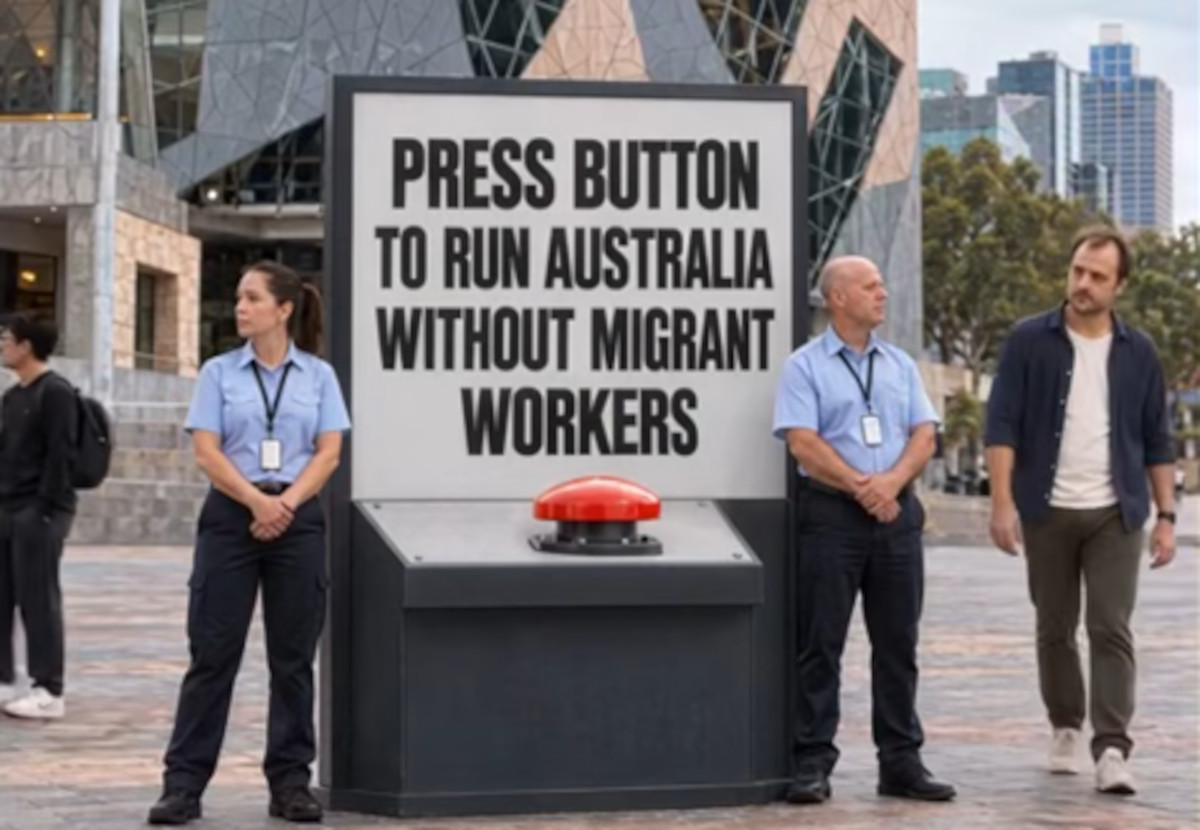
The Australian Hotels Association (AHA) is using social media to put the spotlight on how changes to migration policy could reshape Australia’s workforce, with its striking new ad (below) envisioning what life could be like for ordinary Australians if major cuts to migration take place.
While acknowledging public support for lower migration levels, AHA’s national CEO Stephen Ferguson has stressed the need to consider how reductions can be achieved without creating further workforce challenges.
Ferguson has urged political parties to recognise the contribution skilled migrants and working holidaymakers make to Australia’s workforce, particularly in regional areas.
“All the major political parties have now issued migration policies, but none of them have included the economic impact on the cuts they are proposing,” he said.
Despite the need to prioritise local workers, the hospitality sector continues to face significant recruitment challenges, with 7k chef and cook positions currently unfilled.

Ferguson has called for a balanced approach to migration reform, warning that changes to visa settings must account for ongoing skills shortages and the industry’s ability to fill critical roles.
“Who will replace the thousands of backpackers in regional areas once they no longer have an incentive to go there and work?” he asked.
The federal government’s proposed migration reforms have drawn concern from across the hospitality sector, with industry bodies warning of potential consequences for businesses already struggling to fill vacancies.
Under the plan, net overseas migration would fall to 225,000 by 2027/28, compared with a peak of 547,000 in 2023. Proposed changes to working holiday visas include a ballot system for second and third-year visas, with caps of 45,000 and 5,000 respectively.
The government is also looking to tighten student visa rules, crack down on visa overstayers and redirect skilled migration towards priority sectors, including healthcare, construction, education, law enforcement, defence, resources, agriculture, aquaculture and fishing.

Restaurant & Catering Australia has joined the AHA in raising concerns about the potential impact on hospitality employers. National president John Hart has warned that the industry, which employs around 112k temporary residents, could face prolonged workforce pressures as a result of reduced migration.
Hart said migration policy must account for the role hospitality businesses play in feeding Australians, welcoming visitors and supporting regional communities. He also cautioned that a shrinking pool of available workers could force venues to reduce trading hours or close, with flow-on effects for Australian jobs.
The Australian Chamber of Commerce and Industry has also called for a shift in the migration debate, arguing that policy should focus on workforce needs and economic productivity rather than competing targets for net overseas migration.
Chief executive Andrew McKellar said the government’s proposal risked cutting into essential workforces, while One Nation’s proposed reductions could contribute to a deep recession and the Coalition’s commitment represented a substantial cut.
The chamber is urging policymakers to focus on reforming migration settings to strengthen Australia’s productive capacity and support economic growth, while easing inflationary pressures.
“The problems of migration are largely felt in the cities, but some of the current policies will have the greatest impact on remote and regional Australia,” Ferguson continued.
“Everywhere but the cities.”